
If you’re an edupreneur struggling with low course completion rates, you’re not alone. Many online course creators face this issue, which can lead to bad reviews, refund requests, and a lack of repeat purchases. Luckily, there are proven ways to increase completion rates and get better outcomes for your students.
-
Clearly define learning outcomes: Set clear and achievable learning goals for your course. Ensure that your students understand what they will gain from completing the course.
-
Provide engaging content formats: Use a variety of content types like videos, quizzes, and interactive activities to keep learners engaged throughout the learning process.
-
Encourage active learning: Get students participating through discussions, assignments, and group projects. Active learning promotes knowledge retention and engagement.
-
Create a learning journey: Structure your course with a logical flow, dividing it into modules or sections with clear objectives. Provide a table of contents to help students understand the learning path.
-
Build a supportive online community: Create a private community for your students where they can connect, discuss course materials, and seek help. Social learning and peer support can motivate students to complete the course.
-
Send regular email reminders: Use email automation to send reminders and updates to your learners. Email campaigns can keep them engaged and motivated to complete the course.
-
Offer bonus content or rewards: Provide additional resources or bonus content for completing certain milestones or assignments. This can incentivize and motivate students to finish the course.
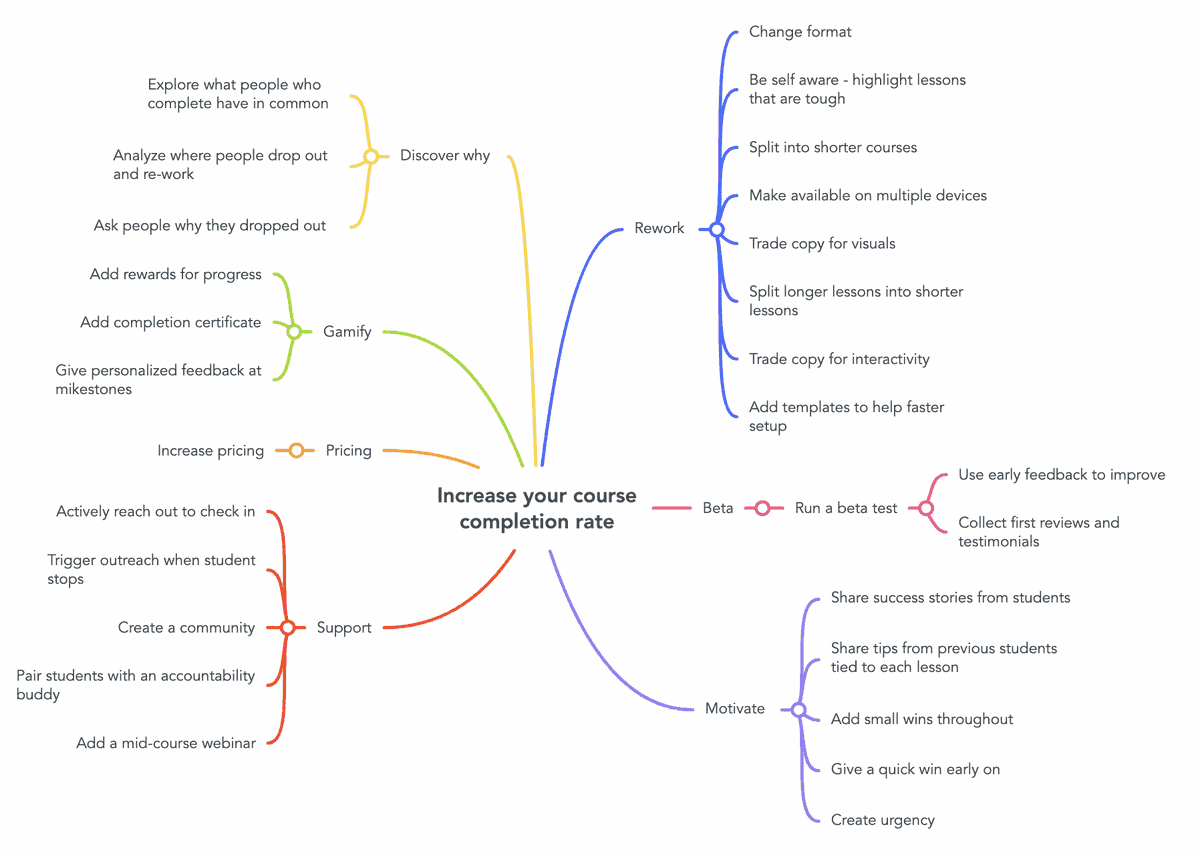
Start by asking people who don’t complete
Reach out to students who didn’t finish your course, in a friendly and non-confrontational way. Their answers will tell you what they struggled with and how to improve the course.
Understanding why some students didn’t finish lets you tailor your content to better meet their needs. Asking also shows students you care about their success.
It’s worth gathering information about the demographics and experience levels of the students your course attracts, too. This data tells you whether your course is reaching the intended audience and where the gaps are.
A friendly email is all it takes. Ask for their feedback and encourage them to share their challenges or suggestions.
Analyze common stop points
Your analytics will show you where learners drop off. Look for the specific modules or sections where students consistently disengage.
Once you know where they get stuck, you can fix it. Simplify complex content, provide clearer instructions, and fill in any information gaps.
Keep checking the data as you go, and refine your content around what your learners actually need.
Identify people who do complete
Look at the students who do finish, and reward them. Recognizing learners who complete your course motivates others to stay engaged and finish too.
Digital badges or certificates work well here. Learners can display them on their profiles or share them with their networks, which boosts their confidence and shows everyone else that people really do finish.
Building real relationships with your students matters too. Personalized feedback and support create a positive learning environment, and satisfied learners are more likely to recommend your course to others.
Keep your expectations realistic, though. Not all learners will complete the course, and that’s okay. Attracting learners with strong motivations and a genuine interest in the topic helps, as does ongoing support through email reminders, personalized communication, and bonus content.
Try a different format
A change of format can keep learners engaged when text alone isn’t working. Some formats to try:
-
Videos: Video makes a course more engaging and dynamic, and visual elements help with retention. Include text transcripts to cover different learning preferences and accessibility needs.
-
Images: Images break up text-heavy content and help illustrate complex concepts.
-
Hybrid Cohort-Based Courses: Combine asynchronous and synchronous learning. Learners work through materials at their own pace, with scheduled sessions for real-time interaction with instructors and peers. The mix suits different learning styles and schedules.
-
Additional Formats: Mix in eBooks, prompts, templates, or interactive quizzes. Variety prevents monotony.
Optimize for quick wins
Small wins early keep students moving. A few ways to build them in:
-
Break Up the Content: Instead of overwhelming learners with long modules, divide the course into smaller, manageable sections so they rack up small wins along the way.
-
Provide Clear Objectives: Outline the learning objectives for each section or module, so learners know what they’ll achieve by completing that part.
-
Use Interactive Elements: Quizzes and mini assignments give immediate feedback and a sense of accomplishment.
-
Incorporate Gamification: Points, badges, or virtual currency let learners earn rewards for completing tasks or mastering specific skills.
Then celebrate those achievements. Send congratulatory emails when learners complete sections or earn badges, and encourage them to share their accomplishments with the community.
3. Offer an Incentive for Completing Your Course
Give students a reason to finish. A few incentives that work:
-
Certificates of Completion: A certificate for finishing the course is a powerful motivator. Digital Marketer’s training courses, for example, offer certificates students can showcase on LinkedIn profiles, resumes, and portfolios.
-
Exclusive Bonuses and Access: Offer exclusive bonuses or access on completion: extra content, resources, or discounts on future courses. It rewards their hard work.
-
One-on-One Sessions or Consultancy: Offer one-on-one sessions or consultancy to students who complete the course. Personal guidance like this is a valuable bonus.
Don’t rely on incentives alone, though. The real driver is the student’s own desire to learn and grow, so the course itself still needs to be engaging, interactive, and genuinely valuable.
Charge more
It sounds counterintuitive, but a higher price can increase completion rates. Students who invest more are more committed.
A study by Teachable found that courses priced above $200 had a 61% higher completion rate than courses priced under $100. When students pay a premium, they want their money’s worth.
Higher pricing also signals quality, which attracts more serious and dedicated learners.
And charging more lets you fund better support for students: personalized attention, one-on-one sessions, or exclusive bonuses.
Offer active support
Don’t leave students to figure things out alone. Active support means ongoing assistance, guidance, and resources for the whole length of the course.
Offer one-on-one sessions or small group discussions where students can ask questions, get feedback, and clear up doubts. A private community or online forum lets them connect with peers, share progress, and support each other through the same experience.
Extra resources help too: bonus videos, worksheets, or quizzes that reinforce key concepts with more examples.
And email automation keeps students on track. Regular updates about upcoming lessons and deadlines remind them to keep going.
Reach out if they stop progress
When a student stalls, reach out and help them get back on track. Here’s how:
-
Send personalized emails or messages: Contact students individually, use their names, and refer to their specific situation. It shows you care about their progress and are willing to help.
-
Offer additional support: Share extra video lessons, worksheets, or quizzes that address whatever they’re stuck on.
-
Create a feedback loop: Ask students to share their challenges over email, in forums, or in your community, then tailor your support to what they tell you.
-
Provide ongoing communication: Keep sending regular updates and reminders about the course so they stay connected to it.
Run a mid co-hort webinar
A mid-cohort webinar gives students real-time interaction and answers to their specific questions. Here’s how to run one:
-
Promote the event: Invite your students by personalized email or message, and spell out what they’ll get from attending, like extra insights and answers to their doubts.
-
Prepare engaging content: Break complex concepts into digestible chunks and add interactive elements like polls, quizzes, or case studies.
-
Incorporate real-time interaction: Encourage students to ask questions, give feedback, or share their experiences during the session.
-
Address specific concerns: Tackle the common challenges students are facing with practical solutions, extra resources, or bonus content.
7. Reward Students For The Progress
Rewarding progress keeps students motivated and engaged. Some ways to celebrate their milestones:
-
Visualize Progress: Add a progress tracker, like a progress bar or percentage complete, so students can see how far they’ve come.
-
Celebrate Milestones: When students complete a module or pass a quiz, send a personalized congratulatory message or email.
-
Personalized Certificates and Badges: Generate certificates and badges for students who complete the course or hit certain goals. Design them in your brand colors.
-
Share on Social Media: Let students share their certificates and badges on social media. It celebrates their accomplishment and advertises your course.
-
Leaderboards: Showcase the top-performing students in your course. A little healthy competition motivates other learners.
5. Make It Easy to Learn on Mobile
Learners expect to open course materials on their phones and tablets, anytime, anywhere. A mobile app for your online course helps a lot here.
When designing course content, keep mobile learners in mind:
-
Mobile-Friendly Design: Optimize for small screens with responsive layouts, larger fonts, and clear navigation menus.
-
Visual Aids and Interactive Elements: Images, videos, and infographics keep things engaging, while quizzes, polls, and discussions keep learning active.
-
Bite-Sized Lessons: Break your content into short, focused lessons. Mobile learners want sessions they can fit into busy schedules without feeling overwhelmed.
Gamify your course
Game-like elements make a course more interactive, enjoyable, and rewarding. Some to consider:
-
Milestones: Break the course into smaller milestones or levels. Each one completed gives learners a sense of accomplishment.
-
Leaderboards: Show learners how they rank against their peers. A little competition fuels motivation.
-
Incentives: Offer badges, rewards, and certificates for completing assignments, quizzes, or modules.
-
Collaborative Learning: Encourage group projects, discussions, or peer feedback. Working together builds community and confidence, and learners pick things up from each other.
-
Progress Tracking: Use progress bars or visual indicators so learners can see how far they’ve come.
Whatever you pick, align the game elements with your course content and learning objectives.
Add social proof / testimonials throughout
Social proof motivates students. When they see that others have completed the course and hit their goals, they’re more likely to push through themselves.
Testimonials from former students add credibility too. Real experiences and outcomes from real people attract and motivate new students.
Start by asking current and former students for feedback. Ask for their honest thoughts, their success stories, lessons learned, and how the course has changed things for them.
Then place those testimonials throughout your course as written quotes, video snippets, or case studies. Pick the ones that highlight specific benefits, transformations, or skills gained.
Add tips throughout
Helpful tips sprinkled through your content make the course easier to follow. Some practical ways to do it:
-
Break down complex concepts: Split complex ideas into bite-sized chunks that are easy to understand.
-
Provide real-world examples: Use practical examples and case studies so learners can connect the concepts to real-life scenarios.
-
Offer step-by-step guidance: Present instructions and tasks in a clear, step-by-step format so learners can follow along with confidence.
-
Encourage active learning: Include quizzes, exercises, and hands-on activities. Learners retain more when they engage with the material directly.
-
Offer additional resources: Supplement your course with articles, videos, or downloadable materials for learners who want to go deeper.
Add completion certificates
Completion certificates validate students’ achievements and give them a reason to finish. Two benefits:
First, certificates are tangible recognition. Students can show them to employers, colleagues, or potential clients to build their professional reputation.
Second, the desire to earn one gives students an extra push to stay committed through the whole course.
Platforms like Thinkific and Kajabi provide multiple certificate templates and automate the certification process, so it costs you little time and effort.
Keep testing ideas
Keep testing and iterating so you learn what works and what doesn’t. Three habits to build:
-
Continuous Assessment: Run regular quizzes and surveys. Quizzes reinforce learning, keep students involved, and let them check their own progress.
-
Gather Valuable Feedback: Surveys show you learners’ experiences and expectations, and where the course needs work.
-
Monitor Analytics: Watch completion rates and engagement levels to find the points where learners disengage or struggle, then adjust your content and delivery.
Send a personalized video to motivate students
A personalized video is a simple way to motivate students and build a sense of community.
The Bonjoro app lets you record and send personalized videos straight to your students’ inboxes. Here’s how to use it:
-
Download the Bonjoro app: Install it on your preferred device.
-
Record a personalized video: Record a short video message. Address the student by name, acknowledge their progress, and offer some encouragement.
-
Customize the video: Mention specific achievements or challenges the student has faced. It makes them feel seen and valued.
-
Send the video: Hit send and the app delivers it straight to the student’s inbox.
That personal connection makes students feel supported and motivated to finish.